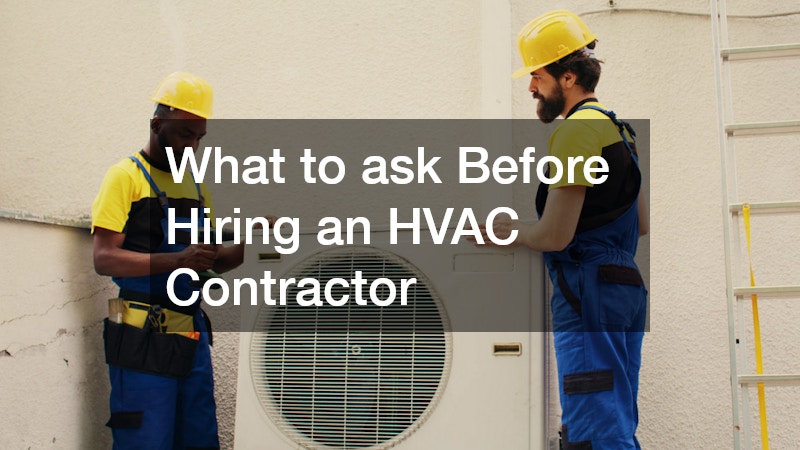
When it comes to maintaining the comfort and safety of your home, hiring the right HVAC contractor is crucial. The right contractor ensures that your heating, ventilation, and air conditioning systems run smoothly throughout the year. Before selecting a professional, it’s important to arm yourself with the right questions to ensure you’re making a well-informed decision.
Experience and Expertise
One of the first things to inquire about when considering an HVAC contractor is their experience and expertise in the field. An experienced contractor brings not only technical skills but also an understanding of the nuances and potential issues with various systems. Ask potential contractors how long they have been in business and what specific expertise they have with systems like yours.
Another critical aspect to consider is the ongoing training and certifications that the contractor and their team hold. Advancements in HVAC technology occur regularly, and it’s vital that any contractor you work with stays current on best practices and emerging technologies. A contractor possessing industry-recognized certifications can provide assurance of their expertise and dedication to excellence.
In addition to training and certifications, references from previous clients can be incredibly telling. Communicate with past customers to understand their experiences and any issues they may have had with the contractor. The more you can learn about a contractor’s past performance, the better informed your decision will be, providing peace of mind in your choice.
Licensing and Insurance
When hiring an HVAC contractor, verifying their licensing and insurance status is non-negotiable. A legitimate contractor will be licensed according to local regulations, assuring you that they meet minimum industry standards. Ask for proof of a valid license, which not only speaks to the contractor’s credibility but also offers protection should issues arise.
Insurance is another critical piece of the puzzle. Verify that the contractor carries both liability insurance and workers’ compensation. This ensures that you are not held financially responsible for any accidental damage to your property or injuries sustained by workers on your premises.
Furthermore, proper licensing and insurance protect you from potential fraudulent activities. A contractor operating without these essentials may offer cheaper services, but the risks involved far outweigh the cost savings. It’s always wiser to invest in a contractor who operates lawfully and responsibly.
Pricing and Contracts
Before signing on the dotted line, thoroughly discuss the pricing structure with your potential HVAC contractor. Transparency in pricing is crucial, as hidden costs or ambiguous fee structures can lead to future disputes. Get a detailed estimate that breaks down costs for labor, materials, and any potential overtime or additional fees.
Understanding how a contractor develops their pricing can also provide insights into their operational model. Some contractors might offer low upfront quotes but nickel and dime you for services that should be included. Ensure all agreements, warranties, and guarantees are documented in a contract. This document serves as protection and should outline all expectations for both parties.
In addition to obtaining a written contract, ask about any special financing options or payment plans available. HVAC systems can be a significant financial commitment, and flexible payment arrangements might ease the burden on your budget. Make sure that all financial discussions are as clear and detailed as possible to prevent any surprises as you proceed with your project.
Environmental Considerations
As more homeowners become environmentally conscious, the demand for energy-efficient HVAC solutions continues to rise. Ask your HVAC contractor about their approach to energy efficiency and whether they can recommend environmentally friendly options for your home. This helps not only in reducing your carbon footprint but also in lowering utility bills over time.
Your contractor should advise on the best systems that offer high Seasonal Energy Efficiency Ratios (SEER) or Annual Fuel Utilization Efficiency (AFUE) ratings. These systems may have higher installation costs, but they save money in the long run due to their energy conservation features. The contractor’s knowledge of energy-efficient models can reveal their commitment to sustainable practices.
A contractor should also be informed about or affiliated with programs that offer incentives or rebates for energy-efficient upgrades. This demonstrates their proactive efforts to provide the latest cost-effective solutions while aligning with environmental stewardship. Proper guidance here can make a significant difference in both your environmental impact and financial outlay.
Customer Service and Support
A positive relationship with your HVAC contractor does not end with installation or repair work. Customer service and support are crucial components that reflect a contractor’s reliability and professionalism. Ensure your contractor is easily accessible and has a strong reputation for responding promptly to service requests or issues.
The contractor should clearly outline support options available after installation, including warranties, maintenance schedules, and emergency repair services. Establishing clear channels for communication and service after the sale ensures peace of mind. It helps ensure that minor hiccups do not escalate into inconvenient or costly problems down the line.
Finally, consider their approach to customer feedback. Contractors who actively seek out and address customer concerns demonstrate a commitment to service excellence and improvement. Enquire if they have a process for customer support that prioritizes your satisfaction and adapts based on consumer input, implying a dedication to maintaining high standards.